



Highlights

Quick Look

Period
November to February

Difficulty
Beginner to Advanced

Duration
7 days

Acommodation
Blue Sardine Boutique Hostel

Group Size
12 students max

Cost
2026: €29502027: €3450
Introduction
A 5-day, hands-on course in French charcuterie and meat preservation.
This course is a deep dive into the refined world of French charcuterie — a hands-on journey through the techniques, ingredients, and preparations that have defined French meat culture for generations.
Over five intensive days in our professional lab, you’ll learn to work with pork, duck, goose, and rabbit, creating a wide variety of French-style products: fresh and emulsified sausages, terrines, pâtés, confits, rillettes, and cooked specialties rooted in both rustic tradition and classical training.
We’ll cover:
During the course, you will taste a wide selection of authentic French charcuterie products, representing the country’s extraordinary diversity of techniques and regional expressions.
You’ll work side-by-side with expert instructors, using professional tools and equipment, while making, analyzing, and understanding French products from start to finish.
What You Will Learn
This course provides the knowledge, skills, and confidence to create your own French-style charcuterie — whether you’re a food artisan, a professional chef, or a dedicated amateur.
Objectives


During the Course, You Will Also
Here, even meals are part of the education.
Every menu is designed to reflect the richness of French culinary heritage, showcasing how charcuterie is not only preserved but also eaten and celebrated at the table.
Lunches and dinners are included and feature many of the products created in class, offering practical insight into their use in traditional and modern French cooking.
This course is designed for chefs, butchers, food artisans, and passionate cooks who want to understand, respect, and apply the proper methods of French charcuterie, extending beyond the supermarket slice to its complete gastronomic identity.

Who teaches this course?
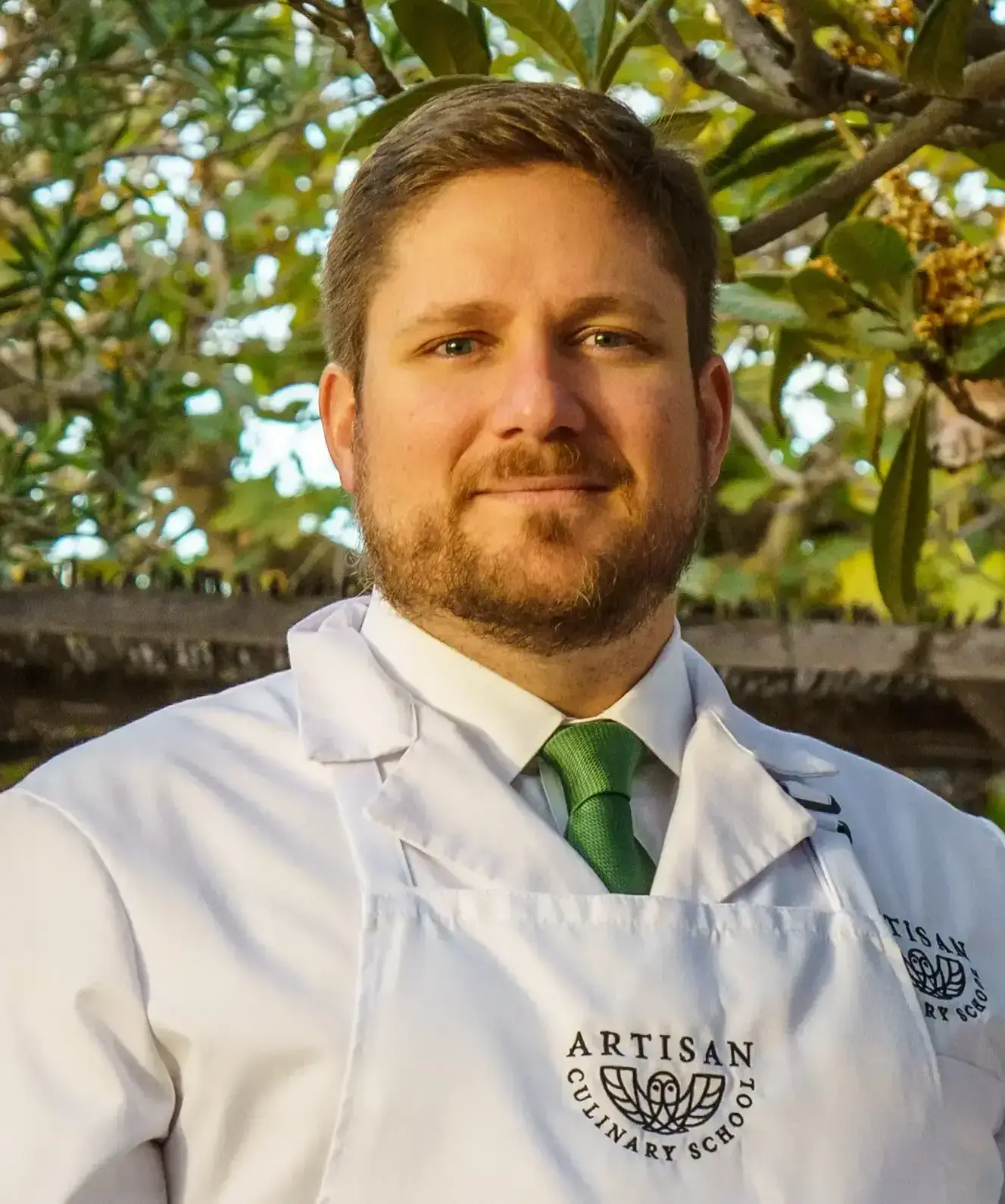
Juan Penzini Granier
Academic Director
Check Bio

Juan Penzini-Granier is the founder and academic director of the Artisan Culinary School. With a career spanning over 15 years, Juan is a seasoned professional with a wealth of knowledge and experience in the culinary industry. Juan’s culinary journey began with formal training in baking, which he then complemented with education as a professional cook, then turned his career towards the managerial part of the culinary business. He went on to own and manage several successful restaurants in Venezuela, where he was awarded the largest concessions system at the most prestigious country club in the city. He also had the opportunity to go back to the school where he started his career, but this time as a kitchen instructor and food and beverage cost professor. Then, seeking to expand his horizons, Juan moved to Italy to pursue an education in professional charcuterie and cheese making and ended up being the director of an international culinary school. As a teacher and instructor, Juan has trained over 500 people from more than 45 countries, instilling in them a passion for culinary artistry and a commitment to excellence. With the Artisan Culinary School, Juan aims to offer a unique and immersive culinary education experience that empowers aspiring food artisans to realize their full potential. Juan’s dedication to culinary education and his vast expertise make him an invaluable leader and mentor at the Artisan Culinary School. His vision and leadership drive the school with excellence and inspire its students to reach new heights in their culinary careers.

Laëtitia Visse
Chef & Charcutier
Check Bio

After studying at the Ferrandi School of Culinary Arts following a literary baccalaureate, and growing up surrounded by baroque music and travel, Laëtitia Visse brings an unexpected edge to the new generation of French cuisine—driven by her boundless love for hearty, no-nonsense food.
She honed her skills alongside several acclaimed chefs before meeting Thomas Brachet at Les Arlots, the renowned Parisian bistro where she discovered the pleasures of house-made sausages, caillettes, and other charcuterie specialties. Since settling in Provence in 2017, Laëtitia has been determined to revive the butchery and charcuterie traditions of French cooking. In the summer of 2020, she opened her restaurant in Marseille: La Femme du Boucher.
Every winter, Laëtitia joins the Artisan Culinary School to teach the Artisan French Charcuterie course, where she shares her expertise in ultra-traditional French recipes and showcases the creative use of offal in charcuterie.

Bill Schindler, PhD
Author & Chef
Check Bio
Dr. Bill Schindler is the author of Eat Like a Human: Nourishing Foods and Ancient Ways of Cooking to Revolutionize Your Health and is an internationally known archaeologist, primitive technologist, and chef. He founded and directs the Eastern Shore Food Lab with a mission to preserve and revive ancestral dietary approaches to create a nourishing, ethical, and sustainable food system and, along with his wife, Christina operates the Modern Stone Age Kitchen, a restaurant and sourdough bakery designed to provide nourishing food created using ancestral approaches maximizing safety, nutrient density and bioavailability to the community. His work is the focus of Wired magazine’s YouTube series, Basic Instincts and Food Science, and he co-starred in the National Geographic Channel series The Great Human Race, which aired in 2016 in 171 countries. Bill will join us during the spring each year. Sharing his knowledge of cheesemaking, bread baking, and vegetable and fruit conservation.
Itinerary
Discover everything we have planned for you in our itinerary.

Day 1
Arrival & Orientation
Arrive in Altea, settle into your room, and join us for a warm orientation, followed by a welcome dinner crafted by our chefs.
Day 2
Butchery & Meat Selection
Dive into French-style butchery with pork, duck, rabbit, and goose cuts, learning how to choose and prepare meat for charcuterie products.
Day 3
Sausages & Emulsions
Master the art of fresh and emulsified sausage production—encompassing saucisse, saucisson, and boudin blanc—focusing on texture, seasoning, and casing techniques.
Day 4
Cooked Charcuterie & Terrines
Create traditional French cooked charcuterie: pâté de campagne, pâté en croûte, fromage de tête, and rustic terrines.
Day 5
Rillettes & Confit
Work with rich duck, goose, and rabbit fat to produce confits and rillettes—classic French preserved specialties rooted in rural tradition.
Day 6
Equipment, Workshop Setup & HACCP, Awards & Farewell Dinner
Learn how to set up a small-scale charcuterie workshop, manage equipment flow, and implement HACCP principles. Wrap up the week with a final Q&A session. We’ll present certificates and awards before gathering to celebrate.
Day 7
Departure
Enjoy a relaxed morning in Altea before your private transfer to the Alicante Airport or the Train Station. A light lunch is available for those with later departures.
Specifics
When you join us at the Artisan Culinary School, everything is designed to allow you to focus entirely on learning, creating, and enjoying the experience.
Course Fees (2025/26)
Course Fees (2027)
Inclusions
*Our wines are carefully selected by our resident sommelier and served at dinner, following European hospitality customs.
Not Included


Who is this course for?
This course is ideal for:

Did you know?

